weblog 2026 |
|
[home] [weblog] [science] [people] [station] [ny-ålesund] [sightings] [sitemap] [nederlands] |
|


Bird flu detected in polar bear and walrus | 19 May 2026 |
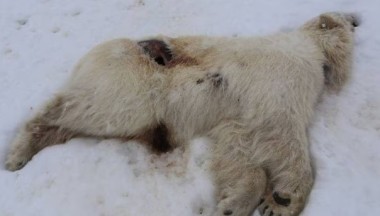
| On Svalbard, a polar bear carcass was found and sampled for avian influenza. This is the first incidence on Svalbard of a bear being killed by avian influenza, type H5N5. This was reported by sysselmesteren.no and NRK.no and I was notified by Fieke Rader.
Earlier, a polar bear carcass infected by avian influenza was found in Alaska, but in that case the avian influenza virus type was H5N1 (ref). Earlier on Svalbard, walrusses have been found killed by avian influenza virusses. It seems that a walrus does not only feed on moluscs but will also eat a (dead) bird. |
|
Barnacle Geese had a massive infection with H5N1 during winter of 2021/22 when approximately 31% of the population (11,400 birds) died (ref). In the summer of 2022, no mortality among barnacle geese was found (ref). Our team had swabbed geese and collected blood plasma for testing on specific antibodies. The latter stil needs to be done in the new NWO-project Polar Flu. Below part of the text from sysselmesteren.no The Norwegian Veterinary Institute has detected highly pathogenic avian influenza virus (H5N5) in a polar bear and a walrus on Svalbard (19/May/2026) Last week, the Veterinary Institute received a report of a dead polar bear and a dead walrus, as well as two polar bears with lameness/paralysis in their hind legs, in Raudfjorden north on Spitsbergen. It was tourist guides in the area who first contacted the Norwegian Polar Institute about the observations. The Governor notified the Norwegian Food Safety Authority, and it was decided that the Veterinary Institute would assist the Governor with field sampling, since rabies and highly pathogenic avian influenza virus could not be ruled out as the cause. The dead polar bear and the dead walrus were quickly found and sampled last Thursday, but no sick polar bears were observed from the air. This is the first confirmed case of highly pathogenic avian influenza virus (HPAI) in polar bears in Europe. No rabies virus was detected in the polar bear and walrus. The polar bear was a one-year-old male, while the walrus was an adult. It was clear that the carcasses had been lying around for some time before they were found, but the findings of the highly pathogenic avian influenza virus in the brains of both animals are consistent with this being the most likely cause of death. | |
[home] [weblog] [science] [people] [station] [ny-ålesund] [sightings] [sitemap] [nederlands]


This page has been given the following keywords: [polar bear] [disease] You can click on each keyword to get an overview about related pages. |